Use Cases / Architects
No Visible Hardware, No Exceptions
Székesfehérvár
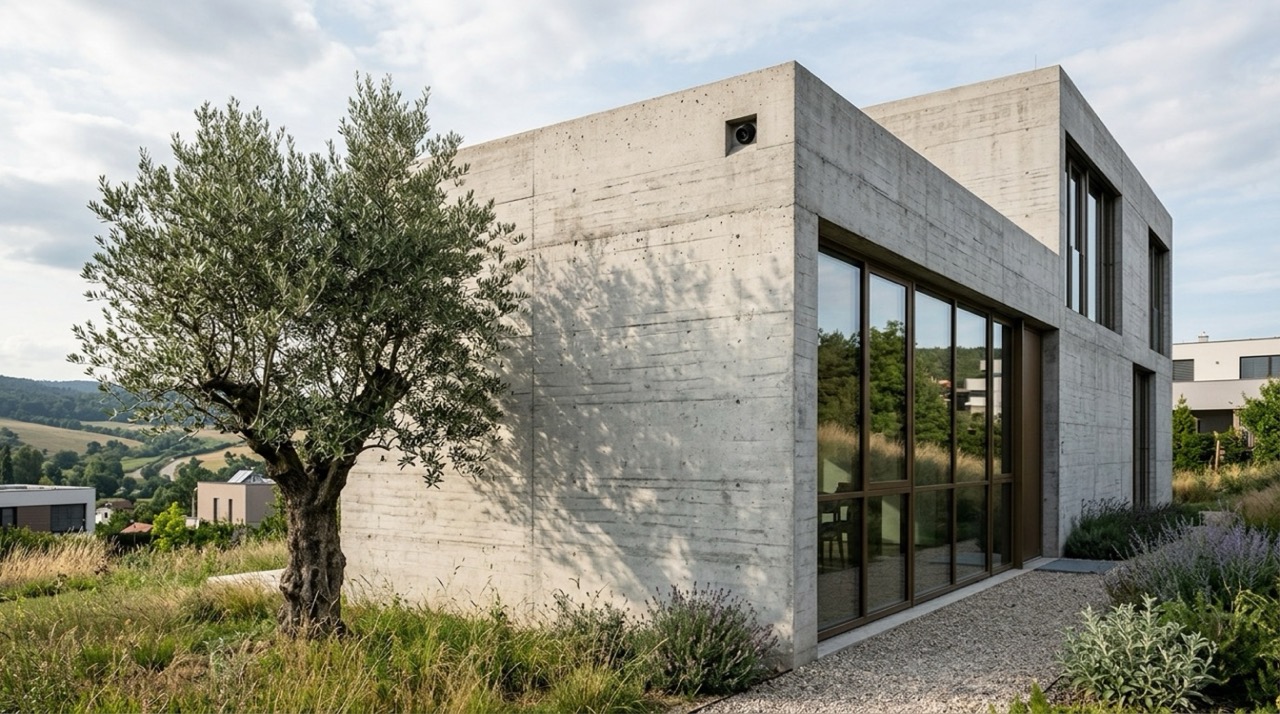
An architect in Székesfehérvár designing a minimalist private residence with an uninterrupted concrete-and-glass facade told every security vendor the same thing during initial consultations: no exposed camera housing, no visible reader, nothing that would break the building's clean geometry. Most vendors quietly suggested she compromise once she saw the standard product options.
The architect refused. The client had commissioned the house specifically for its uncompromising minimalism, and a visible plastic camera bracket or a surface-mounted keypad would have undermined the single design idea the entire facade was built around. Three vendors had already proposed "slightly less visible" standard hardware as a workable middle ground, and she had rejected all three. She was introduced to AION Networks through a structural engineer who had worked with them on a previous concrete-facade project.
AION mapped every device location against the architect's material and joint drawings before construction reached that stage, planning flush-mounted cameras recessed into pre-cast concrete reveals and an access reader integrated behind a matching stone panel with a concealed sensor, all cable runs routed through service cavities identified in the structural plans. Each device's finish was matched to its surrounding material rather than left as standard off-the-shelf casing.
The architect got the facade she had designed, with not a single visible security device breaking its lines, and the client never had to see a compromise they hadn't asked for. AION has since become her standing recommendation whenever a project's design tolerance for visible hardware is close to zero.
Discuss your project